
Could ICE Agents Face Accountability for
Fatal Minneapolis Shootings? A Legal Explainer
Two U.S. citizens killed in separate ICE enforcement actions spark questions about legal consequences and officer immunity
Overview: Fatal Shootings Raise Accountability Questions
Immigration and Customs Enforcement (ICE) agents shot and killed two U.S. citizens in separate enforcement actions in Minneapolis this month as part of President Donald Trump’s hardline immigration crackdown, triggering urgent questions about whether the federal officers involved could face legal accountability.
Bystander video that appears to contradict the government’s accounts has been used by local officials to refute administration claims that the shootings were acts of self-defense. The discrepancies between official narratives and visual evidence have intensified scrutiny of the ICE agents‘ actions and the legal protections they enjoy.5 Key Facts About ICE Accountability in Minneapolis
Reuters – January 26, 2026
First fatal shooting: the January 7 incident involving Renee Good
An ICE officer shot 37-year-old Renee Good in her car on January 7 during an immigration enforcement operation. The Department of Homeland Security (DHS) claimed the officer had fired “defensive shots” after Good attempted to run him over with her vehicle.
However, online videos of the shooting verified by Reuters cast serious doubt on the government’s narrative. The footage shows Good’s wheels turned away from the officer at the time of the shooting, with the officer’s legs appearing clear of the vehicle. The ICE agent did not fall during the incident and was observed walking immediately afterward.5 Key Facts About ICE Accountability in Minneapolis
The shooting of Good, a mother of three, triggered weeks of unrest in Minneapolis and became a flashpoint in the broader debate over federal immigration enforcement tactics. Community members and local officials have demanded accountability and transparency regarding the circumstances of her death.
## The Alex Pretti incident on January 24 was the second fatal shooting.
ICE agents shot 37-year-old Alex Pretti on January 24 in a separate incident that further inflamed tensions in Minneapolis. DHS officials claimed Pretti approached with a handgun and violently resisted attempts to disarm him, characterizing the shooting as necessary to protect officers and the public.5 Key Facts About ICE Accountability in Minneapolis,
Bystander videos verified by Reuters tell a different story. The footage shows Pretti—whom Minneapolis Police Chief Brian O’Hara confirmed carried a handgun lawfully—holding a phone as he tries to help protesters whom ICE agents had pushed to the ground.
Chief O’Hara’s public statement that Pretti was carrying his firearm lawfully adds another layer of complexity to the incident, raising questions about whether federal agents properly assessed the threat level before using deadly force.5 Key Facts About ICE Accountability in Minneapolis
On January 24, 2026, federal agents fired tear gas and other weapons at demonstrators near the location where Pretti was shot and killed, according to photographs captured by Tim Evans for Reuters. The aggressive response to protesters has further strained relations between federal authorities and the Minneapolis community.5 Key Facts About ICE Accountability in Minneapolis
Minnesota Use-of-Force Law: The Legal Standard
State police in Minnesota are only allowed to use deadly force under the state’s use-of-force law if they believe it is necessary to protect themselves or others from death or serious bodily harm. This standard requires officers to reasonably perceive an imminent threat before resorting to lethal measures.5 Key Facts About ICE Accountability in Minneapolis
The law establishes a framework for evaluating whether an officer’s decision to use deadly force was justified based on the circumstances known to the officer at the time of the incident.5 Key Facts About ICE Accountability in Minneapolis, Key factors include the nature of the perceived threat, the availability of alternative responses, and whether a reasonable officer in the same situation would have reached the same conclusion.
Minnesota’s use-of-force statute reflects broader principles of proportionality and necessity that govern police conduct nationwide. Officers must demonstrate that deadly force was the only reasonable option available to address an immediate threat to life or safety.

Two U.S. citizens killed in separate ICE enforcement actions spark questions about legal consequences and officer immunity
Similar to state law, federal law allows the use of deadly force when a reasonable officer believes a person poses an immediate threat of death or serious injury. This standard derives from constitutional principles established through decades of court decisions interpreting the Fourth Amendment’s prohibition on unreasonable seizures.
The Supreme Court has held that the reasonableness of force must be judged from the perspective of a reasonable officer on the scene, accounting for the fact that police officers must make split-second decisions in tense, uncertain, and rapidly evolving circumstances.
5 Key Facts About ICE Accountability in Minneapolis,However, this standard also requires that officers’ beliefs about the threat level be objectively reasonable—not merely subjective or based on unfounded fears. The presence of contradictory video evidence in both Minneapolis shootings raises serious questions about whether the ICE agents could meet this objective reasonableness requirement.5 Key Facts About ICE Accountability in Minneapolis
The Supremacy Doctrine Protects the Federal Government from State Lawsuits.
In most cases, federal agents are immune from state prosecution for actions taken in the course of their official duties. This immunity derives from the Supremacy Clause of the U.S.The United States Constitution states that federal law takes precedence over state law when they conflict.
The immunity protection only applies when an officer’s actions were authorized under federal law and were necessary and proper to carry out their official responsibilities. If actions fall outside the scope of lawful federal authority or violate clearly established constitutional rights, the immunity may not apply.
ICE agents could attempt to move any state criminal case to federal court and argue that they are immune from prosecution if Minnesota authorities charge them with crimes related to the shootings. This procedural mechanism allows federal officers to seek dismissal of state charges based on their federal status.
Minnesota’s Burden: Proving Actions Were Unlawful
If Minnesota prosecutors decide to charge the ICE agents involved in the shootings, the state would need to demonstrate that their actions were clearly unlawful, objectively unreasonable, or outside of their official responsibilities in order to overcome the immunity defense.
This represents a substantial burden for state authorities. They would need to show not merely that the shootings were unjustified, but that they fell so far outside the bounds of lawful federal authority that immunity should not apply.
The bystander video evidence verified by Reuters could prove crucial in meeting this burden. If the footage clearly demonstrates that the ICE agents faced no immediate threat—contradicting their claims of self-defense—it could support an argument that their actions were objectively unreasonable and therefore not protected by federal immunity.
If a judge ruled that the ICE agents were immune from prosecution, the case would be dismissed and the officers could not be charged again for the same conduct. This would represent a complete victory for the federal agents and a significant defeat for those seeking accountability.
Federal Prosecution: An Extremely High Standard
Federal prosecutors can charge law enforcement officers with violating civil rights through excessive use of force, but the legal standard is extremely high and such charges are uncommon. The prosecution must prove that an officer knew his actions were illegal or acted recklessly in disregard of the constitutional limits of his authority.
This mens rea (mental state) requirement makes federal civil rights prosecutions exceptionally difficult. It is not enough to show that an officer made a mistake or used poor judgment—prosecutors must prove the officer acted with deliberate intent to violate constitutional rights or with reckless disregard for those rights.5 Key Facts About ICE Accountability in Minneapolis
The Trump administration has so far defended the actions of the officers involved in both Minneapolis shootings, making federal prosecution unlikely while the current administration remains in power. President Trump has made aggressive immigration enforcement a centerpiece of his agenda, and charging ICE agents with crimes would undermine that policy priority.
Federal prosecutors serve at the pleasure of the President and typically align their charging decisions with administration priorities. While they maintain some independence, high-profile cases involving federal policy initiatives are heavily influenced by political considerations.
Potential Defenses for ICE Agents: Multiple Legal Arguments
The ICE agents involved in the Minneapolis shootings could assert several defenses if charged criminally. Beyond claiming federal immunity, they could argue that their actions were reasonable under the Constitution, that they acted in self-defense, or that they did not intend to harm or kill the victims.
5 Key Facts About ICE Accountability in Minneapolis,A self-defense claim would require the agents to demonstrate that they reasonably believed they faced an imminent threat of death or serious bodily injury and that deadly force was necessary to address that threat. The video evidence could substantially undermine such claims if it shows no credible threat existed.
The agents might also argue that even if their assessment of the threat was mistaken, it was a reasonable mistake made in the heat of the moment. Courts generally give law enforcement officers some latitude for errors in judgment during rapidly evolving confrontational situations.5 Key Facts About ICE Accountability in Minneapolis

5 Key Facts About ICE Accountability in Minneapolis,Additionally, the agents could claim they followed their training and departmental policies regarding use of force. If ICE protocols authorized the actions they took under the circumstances as they perceived them, this could support an argument that their conduct was objectively reasonable even if it ultimately proved to be mistaken.
Qualified Immunity: A Powerful Shield in Civil Lawsuits
Civil lawsuits against federal officials are barred by qualified immunity unless their actions clearly violated a constitutional right that was “clearly established” at the time of the incident. This doctrine has become one of the most significant barriers to civil accountability for law enforcement officers.
According to a series of investigative stories published by Reuters in 2020, this legal standard has evolved into a highly effective tool for shielding police officers who are accused of using excessive force. Courts often dismiss civil rights lawsuits at early stages based on qualified immunity, preventing cases from reaching juries.
The “clearly established” requirement means plaintiffs must point to prior court decisions with nearly identical facts holding that the conduct violated constitutional rights. This extremely narrow standard allows officers to escape liability even when their conduct was clearly unconstitutional if no prior case addressed that precise situation.5 Key Facts About ICE Accountability in Minneapolis
For the families of Renee Good and Alex Pretti, overcoming qualified immunity would require demonstrating that it was clearly established in January 2026 that shooting a person under the specific circumstances of each case violated the Fourth Amendment. The existence of contradictory video evidence could help meet this burden, but success is far from guaranteed.
Federal Tort Claims Act: An Alternative Path to Compensation
5 Key Facts About ICE Accountability in Minneapolis,Victims and their families can also sue the federal government for compensation when its employees cause financial or bodily injury in the course of their work. This is covered by the Federal Tort Claims Act (FTCA) of 1946, which creates an exception to the sovereign immunity doctrine that typically protects the federal government from lawsuits.
A plaintiff typically alleges wrongdoing or negligence on the part of a government employee in an FTCA case. Unlike civil rights lawsuits against individual officers, FTCA claims do not require proving a constitutional violation—only that the government employee acted negligently or wrongfully in a way that caused injury.5 Key Facts About ICE Accountability in Minneapolis
Families of people who were killed by ICE agents would be able to sue for wrongful death under the FTCA. Such claims could seek compensation for loss of financial support, loss of companionship, funeral expenses, and other damages recognized under the law of the state where the incident occurred.
Limitations and Obstacles in FTCA Claims
Despite the fact that the FTCA provides a rare avenue for bringing a lawsuit against the federal government, these claims face significant limitations and obstacles. Legal experts generally view the law as a weak mechanism for dealing with misconduct on the part of government officials.
5 Key Facts About ICE Accountability in Minneapolis,One major limitation is that FTCA claims are decided by judges, not juries. This means plaintiffs cannot appeal to jury sympathy and must convince a federal judge—who may be deferential to government arguments—that the government employee acted wrongfully.

The FTCA also contains numerous exceptions that can bar claims. For example, claims arising from the exercise of discretionary functions are excluded, and the government can argue that split-second decisions about when to use force fall within this exception.
Additionally, the FTCA caps certain types of damages and does not allow for punitive damages, which are often sought in cases involving egregious misconduct. This means even successful plaintiffs may receive less compensation than they would in a lawsuit against a private party.5 Key Facts About ICE Accountability in Minneapolis
The administrative claims process required before filing an FTCA lawsuit adds delay and complexity. Plaintiffs must first present their claim to the relevant federal agency, wait for a decision (or six months to pass), and only then file in federal court if the claim is denied or not resolved.
Video Evidence: Crucial Factor in Accountability Determination
The bystander video evidence verified by Reuters plays a crucial role in determining whether the ICE agents involved in the Minneapolis shootings could face accountability. In both cases, the footage appears to contradict official government narratives about the threat level the officers faced.5 Key Facts About ICE Accountability in Minneapolis
5 Key Facts About ICE Accountability in Minneapolis,In the Renee Good shooting, video shows her wheels turned away from the officer and his legs clear of her vehicle, undermining claims that she attempted to run him over. In the Alex Pretti shooting, video shows him holding a phone rather than a weapon, contradicting claims that he approached with a gun and violently resisted.
This video evidence could prove decisive in both criminal and civil proceedings. Courts increasingly rely on video footage to evaluate the reasonableness of officers’ use-of-force decisions, particularly when the video clearly contradicts officer testimony.
However, federal agents and their attorneys will likely argue that the video does not capture everything the officers could see and perceive, that it does not reflect the officers’ reasonable fear in the moment, and that split-second decisions cannot be fairly judged with the benefit of hindsight and repeated video review.5 Key Facts About ICE Accountability in Minneapolis,
Local Officials Challenge Federal Narratives
5 Key Facts About ICE Accountability in Minneapolis,Local officials in Minneapolis have used the bystander video evidence to refute administration claims that the shootings were justified acts of self-defense. Minneapolis Police Chief Brian O’Hara’s statement that Alex Pretti carried his handgun lawfully represents a direct challenge to DHS characterizations of the incident.
5 Key Facts About ICE Accountability in Minneapolis,Mayor Jacob Frey and other Minneapolis leaders have called for independent investigations and greater transparency regarding federal immigration enforcement operations in their city. This local-federal tension reflects broader conflicts over immigration policy and the extent of federal authority in local communities.
The willingness of local officials to publicly contradict federal narratives could influence public opinion and potentially affect political calculations regarding whether to pursue charges against the ICE agents. However, local officials have limited direct authority over federal officers and federal prosecution decisions.
5 Key Facts About ICE Accountability in Minneapolis,Minnesota state authorities, including the attorney general and county prosecutors, would have jurisdiction to bring state criminal charges, though they would face the federal immunity obstacles discussed above. Their decisions about whether to charge the ICE agents will likely be influenced by the strength of available evidence, legal precedents, and political considerations.

Trump Administration Defense of ICE Actions
5 Key Facts About ICE Accountability in Minneapolis,The Trump administration has consistently defended the actions of ICE agents involved in the Minneapolis shootings, characterizing them as necessary and justified responses to threats. Vice President JD Vance personally traveled to Minneapolis to support the federal officers and blame local officials and protesters for creating chaos.
5 Key Facts About ICE Accountability in Minneapolis,This administration support makes federal prosecution of the ICE agents extremely unlikely while President Trump remains in office. The Department of Justice, which would handle any federal civil rights prosecution, operates under the President’s authority and typically aligns its priorities with administration policy.
The administration’s defense of the shootings fits within its broader emphasis on aggressive immigration enforcement and support for law enforcement officers carrying out that mission. Charging ICE agents with crimes would send a message contradicting this policy priority and potentially deter other federal officers from vigorous enforcement actions.
President Trump has previously pardoned law enforcement officers convicted of civil rights violations, suggesting that even if charges were somehow brought and sustained, he might exercise clemency on behalf of ICE agents he views as unfairly targeted for doing their jobs.
Historical Rarity of Law Enforcement Prosecutions
Prosecutions of law enforcement officers for on-duty shootings remain extremely rare, whether at the state or federal level. The combination of legal protections, prosecutorial reluctance, and deference to officers’ split-second judgments creates substantial barriers to accountability.
5 Key Facts About ICE Accountability in Minneapolis,When prosecutions do occur, they often result from sustained public pressure, clear video evidence of wrongdoing, and political will to hold officers accountable. The Minneapolis shootings have generated significant public attention and protest, and video evidence appears to contradict official accounts, but whether these factors will overcome the structural barriers to prosecution remains uncertain.
The families of Renee Good and Alex Pretti face a legal landscape heavily weighted in favor of the federal agents who killed their loved ones. While multiple potential avenues for accountability exist—state prosecution, federal prosecution, and civil lawsuits—each faces substantial legal obstacles that make success difficult.
Community Response and Ongoing Protests
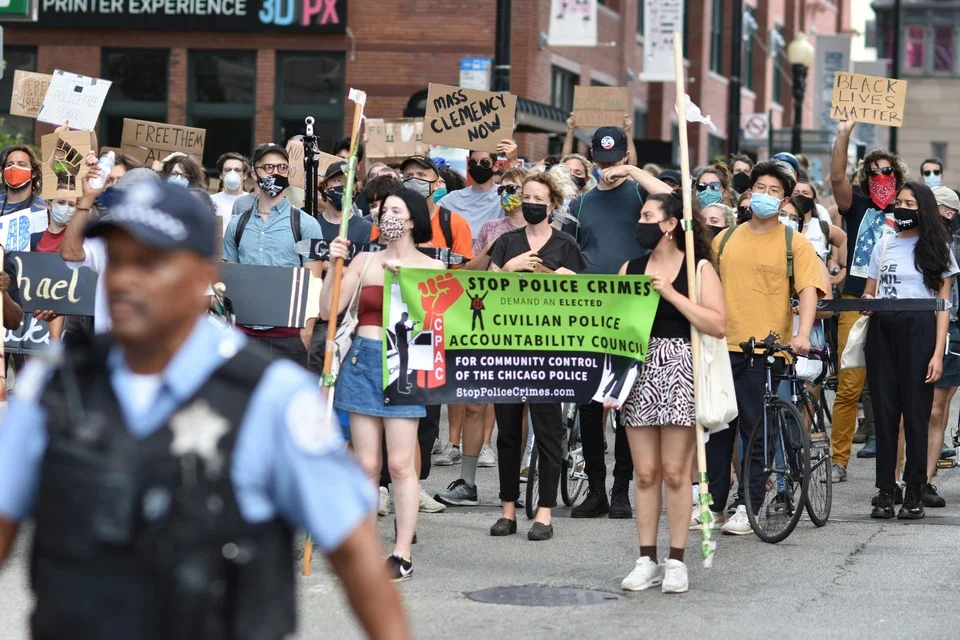
Demonstrators in Minneapolis have responded to the shootings with sustained protests demanding justice and accountability. On January 24, 2026, federal agents fired tear gas and other weapons at protesters near the location where Alex Pretti was killed, further escalating tensions.
The community response reflects not only anger about the specific shootings but broader concerns about federal immigration enforcement tactics, the detention of children, and the massive presence of heavily armed masked federal agents in Minneapolis neighborhoods.5 Key Facts About ICE Accountability in Minneapolis,
Protest organizers have called for independent investigations, charges against the ICE agents involved, policy reforms to prevent future shootings, and an end to what they characterize as an occupation of their city by federal forces. These demands have garnered support from community leaders, civil rights organizations, and some elected officials.5 Key Facts About ICE Accountability in Minneapolis,
The sustained nature of the protests and the willingness of demonstrators to face tear gas and other crowd control measures demonstrate the depth of community feeling about these incidents. This public pressure could influence decision-makers considering whether to pursue accountability measures.
Legal Experts’ Assessments of Accountability Prospects
Legal experts generally view the prospects for holding the ICE agents accountable as limited, given the multiple layers of legal protection available to federal officers acting in their official capacity. The combination of federal immunity from state prosecution, the high mens rea standard for federal civil rights charges, qualified immunity in civil cases, and FTCA limitations creates a formidable barrier.
5 Key Facts About ICE Accountability in Minneapolis,However, experts also note that the strength of the video evidence in both cases could prove decisive if prosecutors and courts are willing to give it appropriate weight. Video that clearly contradicts officer claims about the threat they faced can overcome even substantial legal protections in some circumstances.
The political dimension of any prosecution decision cannot be ignored. Prosecutors must consider not only legal merits but also public sentiment, political pressure, and the precedent any charging decision would set for future cases involving federal agents conducting immigration enforcement operations.
Some legal observers suggest that civil lawsuits under the FTCA may represent the most viable path to some form of accountability, even if the limitations of that mechanism mean families cannot obtain full justice. Others argue that only criminal charges can provide appropriate accountability for what they view as unjustified killings.
Conclusion: Multiple Paths Forward, Uncertain Outcomes
ICE agents who shot and killed Renee Good and Alex Pretti in Minneapolis could potentially face accountability through several mechanisms: state criminal prosecution, federal civil rights charges, or civil lawsuits seeking damages. However, each path faces significant legal obstacles that make accountability uncertain.
Federal immunity protects ICE agents from state prosecution unless Minnesota can prove their actions were clearly unlawful and outside their official responsibilities. Federal prosecution requires proving the agents knowingly violated constitutional rights or acted with reckless disregard—an extremely high standard that the Trump administration shows no inclination to pursue.
Civil lawsuits face the qualified immunity doctrine, which shields officers unless they violated clearly established constitutional rights, and the FTCA process, which legal experts view as a weak accountability mechanism despite offering a rare opportunity to sue the federal government.
The bystander video evidence verified by Reuters provides the strongest basis for challenging official narratives and potentially overcoming legal protections. If the footage clearly demonstrates that the ICE agents faced no legitimate threat, it could support both criminal charges and civil liability.
The families of Renee Good and Alex Pretti, the Minneapolis community, and observers nationwide await decisions about whether anyone will be held accountable for these fatal shootings. The outcome will have implications not only for these specific cases but for federal immigration enforcement practices and the balance between officer protection and public accountability more broadly.
As protests continue and pressure mounts for transparency and justice, the legal system faces a test of whether existing accountability mechanisms can function effectively when federal agents use deadly force in circumstances that video evidence suggests may not have justified lethal response.
- Q: What are the pros and cons of ICE immigration enforcement?
- A: Pros include deporting violent criminals and deterring illegal crossings; cons include separating families, racial profiling, deaths in detention, and deportations without due process.
- Q: Is ICE immigration good or bad?
- A: It’s polarizing—supporters say it protects national security and public safety, while critics argue it uses excessive force, violates court orders, and traumatizes immigrant communities.
- Q: What are the good things about ICE immigration?
- A: ICE deports dangerous criminals, dismantles human and drug trafficking networks, and enforces immigration laws to deter unlawful border crossings.
- Q: What does ICE do to immigrants?
- A: ICE arrests, detains, and deported immigrants; it also runs detention centers holding over 70,000 people daily and prosecutes illegal entry as a federal crime.
- Q: How many people has ICE deported in 2026?
- A: Exact year‑to‑date totals are not yet final; deportations following ICE arrest increased more than fivefold between late 2024 and early 2026, with detention populations reaching record highs.
- Q: Has ICE deported any US citizens in 2026?
- A: Yes—in February 2026, a woman with three children, including a six‑year‑old US citizen, was deported to Honduras after being ordered to report to ICE repeatedly.
- Q: What has ICE done illegally?
- A: ICE has violated court orders, used after‑the‑fact arrest warrants deemed unconstitutional, and deported detainees in defiance of judges’ rulings.
- Q: What are some recent news articles about ICE in 2026?
- A: Headlines include “ICE Expands Detention Plan,” “ICE condemned for ‘police state’ tactics,” “Judge rebukes Trump’s ICE detention policy,” and “Blumenthal Releases Whistleblower Docs on ICE Training Cuts.”

