Navigating Hormuz: Trump’s Bold Move Against China’s InfluenceI, remember sitting at my desk one evening, watching crude oil futures tick upward on my Bloomberg terminal — each jump a few cents higher, then a dollar, then five. My inbox was lighting up with alerts. The Strait of Hormuz.
Published: May 2026 | Category: Geopolitics & Global Affairs
I remember sitting at my desk one evening, watching crude oil futures tick upward on my Bloomberg terminal — each jump a few cents higher, then a dollar, then five.Navigating Hormuz: Trump’s Bold Move Against China’s InfluenceI, My inbox was lighting up with alerts. The Strait of Hormuz. Again. And this time, it wasn’t just a threat. It was real, and the ripple effects were being felt everywhere from fuel stations in Lahore to shipping desks in Rotterdam.
If you follow global politics even casually, you’ve probably heard the name “Hormuz” thrown around a lot lately. But what’s actually happening there, and why is Donald Trump’s strategy around it either a masterstroke or a massive gamble — depending on who you ask? Let me break it down for you, the way I’d explain it to a friend over coffee.
First, Let’s Talk About Who’s Actually Running the Show
Before we get into the strategy, a quick reality check on the players involved.
Donald Trump — currently 79 years old — is the sitting U.S. president. He serves as the 47th president of the United States. His current Donald Trump presidential term end date is January 20, 2029. If you’ve been wondering who is the president of USA now, the answer is Donald J. Trump, who reclaimed the White House after defeating the Democrats in the 2024 election. He’s serving his second, nonconsecutive term — a rare feat in American political history.
Who is the president of USA before Donald Trump? That was Joe Biden — the 46th president — who served from January 20, 2021 to January 20, 2025. Biden was actually the oldest sitting president in U.S. history at 82 years old by the time he left office. Navigating Hormuz: Trump’s Bold Move Against China’s InfluenceI, And fun fact: Donald Trump age at inauguration for his second term was 78, making him the oldest person ever sworn into office — edging out Biden by just five months. So yes, how many years does Trump have as president in total? Eight years across two terms, with the current one running through January 2029.
And just to answer the question that trends online constantly — Melania Trump remains the First Lady, having returned to that role when Trump began his second term.
Now, with that cleared up — back to Hormuz.
What Even Is the Strait of Hormuz, and Why Should You Care?
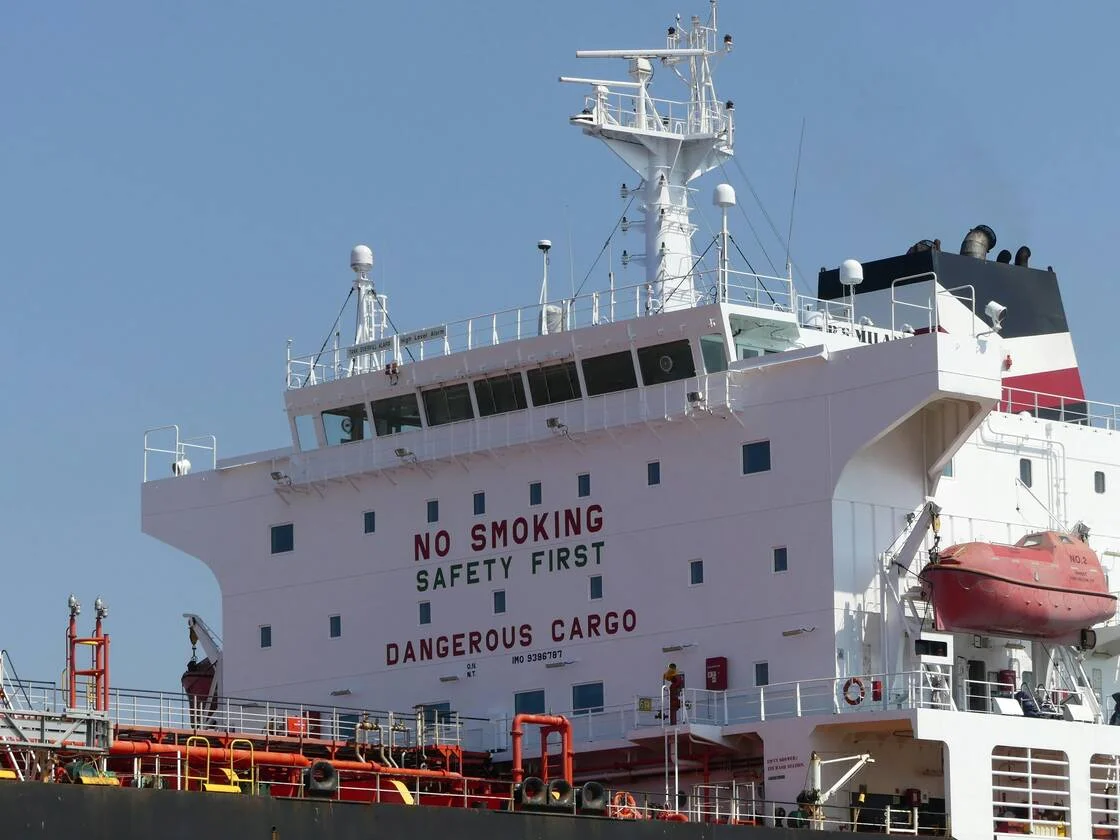
Here’s the simplest way I can put it: imagine a narrow doorway that roughly 20% of the world’s oil supply passes through every single day. That’s the Strait of Hormuz — a 21-mile-wide chokepoint between Iran and Oman.Navigating Hormuz: Trump’s Bold Move Against China’s InfluenceI,
If that door gets shut, even for a week, global oil prices spike, supply chains freeze, and economies start sweating. We’re talking $100+ per barrel territory very quickly. And this isn’t hypothetical anymore.Navigating Hormuz: Trump’s Bold Move Against China’s InfluenceI,
When the U.S. struck Iranian nuclear facilities in June 2025, Iran’s parliament voted to close the Strait. Supertankers started doing U-turns in the middle of the Gulf. Oil markets went into a frenzy. That moment was when Trump’s real pressure game against Trump China Xi Jinping began in earnest.
China’s Uncomfortable Position
Here’s where it gets genuinely fascinating — and a little ironic.
China buys an estimated 90% of Iran’s seaborne crude oil exports. That’s a staggering dependency. So when the U.S. blockaded Iranian shipping in the Strait of Hormuz, it wasn’t just squeezing Tehran. It was, effectively, squeezing Beijing too.Navigating Hormuz: Trump’s Bold Move Against China’s InfluenceI,
Think about it from Xi Jinping’s perspective. Your most important energy supplier just got cut off. The chokepoint your entire East Asian energy security runs through is now contested by the American military. You need Iranian oil. You also desperately need stable trade relations with the U.S. — especially after the bruising tariff wars of 2024 and 2025.
That’s the vice trump china policy was designed to create.Navigating Hormuz: Trump’s Bold Move Against China’s InfluenceI,
Secretary of State Marco Rubio basically said the quiet part out loud on Fox News back in June 2025: “I encourage the Chinese government in Beijing to call them [Iran] about that, because they heavily depend on the Strait of Hormuz for their oil.”
Translation: Beijing, you have more influence over Tehran than we do. Use it. Or watch your energy imports dry up.

Trump’s Actual Strategy — Bolder Than It Looks
From the outside, Trump’s Hormuz play looked reckless. Strike Iran’s nuclear sites. Escalate in the Gulf. Invite a global energy crisis. Why on earth would a president want $100-per-barrel oil? He was literally posting “Keep oil prices DOWN. I’m watching!” on social media.
But look deeper, and you start to see the architecture.Navigating Hormuz: Trump’s Bold Move Against China’s InfluenceI,
Step 1: Create the crisis. By striking Iranian nuclear facilities, Trump forced Iran to make a desperate move — threatening the Strait. This turned the Hormuz situation from a vague geopolitical tension into an immediate, concrete emergency.
Step 2: Make China the solution. Rather than negotiating with Iran directly (which would have meant conceding American leverage), the Trump White House pivoted and made China the indispensable middleman. Washington essentially told Beijing: “You want this resolved? Then you call Tehran.” This is a classic pressure-through-a-third-party move.
Step 3: Walk into Beijing looking like a dealmaker. Trump is scheduled for a two-day summit with Xi Jinping in Beijing on May 14-15, 2026 — which is literally happening as you’re reading this. He reportedly wants to arrive looking like the man who can end the Hormuz crisis and bring stability back to global energy markets. That’s leverage. That’s the “strength projection” analysts at Brookings have been talking about.
Step 4: Use the summit to restructure the relationship. The meetings include bilateral sessions, a tour of the Temple of Heaven, and working lunches. The agenda is packed. Tariffs, AI communication protocols, Hormuz — all on the table. Trump needs Xi to blink on Iran. Xi needs Trump to ease up on trade pressure. Both need a win to take home.
The Risks Nobody Is Talking About Enough
Navigating Hormuz: Trump’s Bold Move Against China’s InfluenceI, I want to be honest here, because this strategy has some real holes in it — and if you’re trying to understand global markets or make any kind of investment decisions, ignoring the downside is a mistake.
The Taiwan Precedent Problem is the big one. Legal scholars and defense analysts have pointed out something uncomfortable: by enforcing a de facto naval blockade in the Strait of Hormuz — which is technically classified as an international waterway under UNCLOS Article 38 — the U.S. is essentially setting a precedent that national security can override freedom of navigation. China can (and almost certainly will) use that exact logic to justify future actions in the Taiwan Strait, which Beijing has increasingly been calling “internal waters” since 2022. Carlyle Thayer, emeritus professor at the Australian Defence Force Academy, put it bluntly: this could give China a framework to legalize a blockade of Taiwan.Navigating Hormuz: Trump’s Bold Move Against China’s InfluenceI,
The leverage question is also murkier than advertised. Fortune magazine ran a sharp piece pointing out that Trump is flying to Beijing believing he has leverage — while China spent the past six years systematically reducing America’s ability to pressure it. Remember when Beijing played the rare earth card in 2024, restricting exports of materials critical to U.S. tech manufacturing? That forced Trump to dramatically cut tariffs. China isn’t without its own pressure points.
And gasoline prices back home are a political time bomb. Every time oil ticks above $90/barrel, Trump’s domestic approval takes a hit. The joe biden president era was defined partly by energy price inflation — and Biden paid a steep political price for it. Trump clearly does not want to walk into the same trap. Hence the all-caps social media posts demanding lower oil prices and the “Drill, baby, drill” directives to the Department of Energy.

What China Is Actually Doing
Here’s what’s interesting about Xi Jinping’s moves through all of this: they’ve been deliberately ambiguous.
Iran’s Foreign Minister visited Beijing for talks. That raised hopes in Washington that China was preparing to broker a peace. But analysts pointed out this was possibly theater — Xi telling Trump, “Look, I already called them. Don’t expect more from me.”Navigating Hormuz: Trump’s Bold Move Against China’s InfluenceI,
Meanwhile, as the Hormuz crisis dragged on, China quietly continued supplying distressed economies with oil and commodities, deepening its influence across Southeast Asia and the Middle East — essentially playing the role of the reliable, stable partner while the U.S. was seen as the disruptor.
CNN’s analysis of the pre-summit situation put it well: China has moved to stabilize perceptions that Trump’s power is ebbing — and that the U.S. is a less predictable partner than Beijing.
That’s a narrative problem for Trump that the Beijing summit needs to fix.
Common Mistakes People Make When Reading This Situation
After tracking this story for months, I’ve seen a lot of hot takes that miss the mark. Here are the ones that bother me most:
“Trump is just being reckless.” That’s lazy analysis. The Hormuz play — whatever you think of its ethics — is a calculated geopolitical pressure campaign. Calling it random ignores the internal logic.Navigating Hormuz: Trump’s Bold Move Against China’s InfluenceI,
“China will just give in.” No, it won’t. China has spent decades building energy diversification routes, deepening ties with Gulf states, and reducing dollar dependency precisely to avoid being cornered by U.S. pressure. Xi Jinping is not going to fold in 48 hours of summit talks.Navigating Hormuz: Trump’s Bold Move Against China’s InfluenceI,
“This is only about Iran.” Wrong. Iran is the immediate flashpoint, but the deeper game is about rewriting the rules of U.S.-China competition in the Middle East, maritime trade routes, and ultimately the global energy order. The summit is about recalibrating that relationship — not just reopening a shipping lane.
“The blockade only hurts Iran.” As we covered, China’s energy imports are deeply affected too. And the precedent set for maritime law has implications that will outlast the current Iran conflict by decades.Navigating Hormuz: Trump’s Bold Move Against China’s InfluenceI,

Where This Leaves the World Right Now
As of today, May 13, 2026, Trump is en route to Beijing. The summit starts tomorrow. Global oil markets are watching. Shipping companies are holding their breath.
The Strait of Hormuz remains one of the most consequential 21-mile stretches of water on the planet — and it’s now at the center of the most important bilateral meeting of the year.
Whether Trump’s bold play works will depend on something simple: whether Xi needs this deal as much as Trump does. And right now, the honest answer is — nobody is entirely sure.Navigating Hormuz: Trump’s Bold Move Against China’s InfluenceI,
What I do know, from watching markets, reading the cables, and following every twist in this story, is that the outcome of the Beijing summit will shape energy prices, shipping routes, and the geopolitical balance in the Gulf for years to come. It affects the price of fuel in your city. It affects your supply chain, your investments, your everyday economics.
So yeah — it’s worth paying attention to a narrow waterway most people couldn’t find on a map two years ago.
Did this help clarify the Hormuz situation for you? Drop your thoughts in the comments — I read every one. And if you’re tracking global energy markets or geopolitics, bookmark this page. This story is far from over.
❓ Frequently Asked Questions (FAQ)
Q: Is China blockading the South China Sea? China is not blockading the entire South China Sea, but it is aggressively tightening control over key disputed areas using coast guard vessels, fishing militia, and floating barriers — particularly while U.S. attention is focused on the Middle East crisis.
Q: Why is Trump blocking the Strait of Hormuz? Trump isn’t blocking the strait — he launched a counter-blockade against Iranian ports in April 2026 after Iran closed the strait in retaliation for U.S.-Israeli strikes on Iran. The goal is to pressure Iran into reopening the waterway and to use China’s oil dependency as diplomatic leverage.
Q: What is China doing at Scarborough Shoal? In April 2026, China deployed a 352-metre floating barrier and multiple vessels at the entrance to Scarborough Shoal, effectively blocking Filipino fishermen and coast guard from accessing the disputed reef — diplomats fear China may be escalating while the U.S. is preoccupied with the Middle East conflict.
Q: How can China survive without the Strait of Hormuz? China held approximately 1.39 billion barrels in storage as of early March 2026 — enough to cover around 120 days of net crude oil imports — plus it has Russian pipeline supplies and floating Iranian oil stocks, giving it meaningful short-term resilience.
Q: Do Chinese ships still pass through the Strait of Hormuz? Iran has allowed only Iran-approved vessels to pass the strait during the conflict, mostly petroleum ships bound for China and India, some with military escort. General commercial shipping remains effectively halted.
Q: Why is Trump blockading Iran? The U.S. launched its naval counter-blockade on April 13, 2026, targeting all ships attempting to reach Iranian ports — as an attempt to lower global oil prices and force Iran back to the negotiating table over the Hormuz closure.
Q: Is the Strait of Hormuz open right now? Almost no shipping has used the strait and it remains effectively closed. Nearly 80% of oil and gas executives surveyed by the Dallas Fed believe the strait will not reopen until August 2026 or later.
Q: How much oil does China get from the Strait of Hormuz? China alone accounts for 37.7% of all oil exports that pass through the Strait of Hormuz — more than any other country by a wide margin. Around 45–50% of China’s total crude oil imports transit this single waterway.